Jean Pierre Imbert

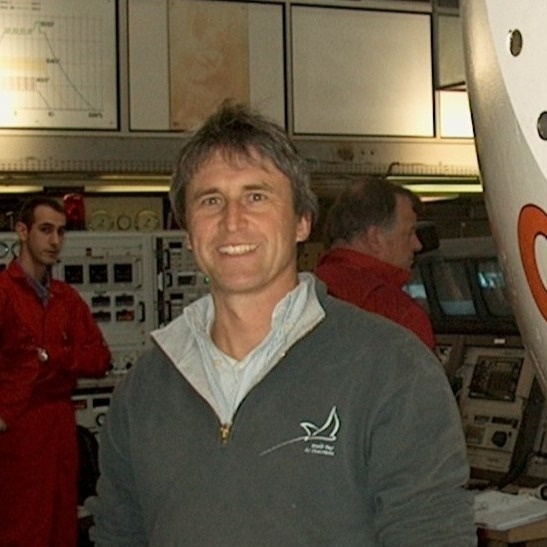
I was drafted into the Navy Diving Department, by mistake. To take advantage of my fresh computer skills, they asked me to calculate decompression tables for pigs after they had been compressed to 700 m. Few pigs survived, but I had discovered a vocation.
A year later I was at the Institute of Environmental Medicine in Philadelphia, during the 450 m Predictive Study IV experiment. Prof. Lambertsen gave me rabbits to expose to isobaric counter diffusion, but they died of heart attack during the pressurization, and my work has remained inconclusive.
Back in France, I joined Comex as a research engineer. I followed the whole deep experimental program, until the last hydrogen dive to 701m. I eventually became Comex Diving Manager, and wrote shelves of diving manuals. I also matured my decompression models and issued a whole set of Comex and later French MT92 tables.
This allowed me to participate in the deep Norwegian contracts of the 80s and visit Brazil when deep diving operations started seriously there.
1995 was a bad year for the offshore industry, and for me in particular. I left Comex and started a new career with technical diving. Trained by Billy Deans, I became the French IANTD licensee and enjoyed teaching trimix and rebreather diving.
In 2005, I returned to the offshore industry and became an active consultant for large North Sea companies. To develop and validate new procedures, I needed real science and ran several divers’ monitoring programs offshore. Finally, I became involved in tunneling and designed trimix tables for a difficult project in Hong Kong.
This is how you end up after buying a snorkeling kit at 10 years old, provided you have a taste for bubble equations, and a little bit of luck.
Title: Options in decompression: linking advanced theories to simple Gradient Factors
Decompression today is more than a bubble story. Building a decompression model requires bolting together several layers of complexity. The diver, his lifestyle, and diving history. The dive profile, its ups and downs, imposed by the cave or the procedure. The ascent, triggering the various bubble scenarios. The inflammation created by circulating bubbles.
This complexity provides options, and selecting options determines a strategy. Commercial divers, military divers, and tech divers share the same physiological problems but use different strategies to manage all these events during their ascent.
A review is proposed on the latest decompression theories, and an attempt is made to link them to Gradient Factors.
Extracting Gradient Factors from commercial diving tables suggests that the GF High, which fixes the last stop time, controls the overall conservatism, while GF Low, which sets the first stop depth, reveals the decompression strategy adopted. Hence, it seems there is no ultimate decompression algorithm, but rather various experiences expressed through Gradient Factors. The "Map My Gradients" project is presented as a next collaborative research program.
2026-11-21

- Talk 2
- lecture hall 2